

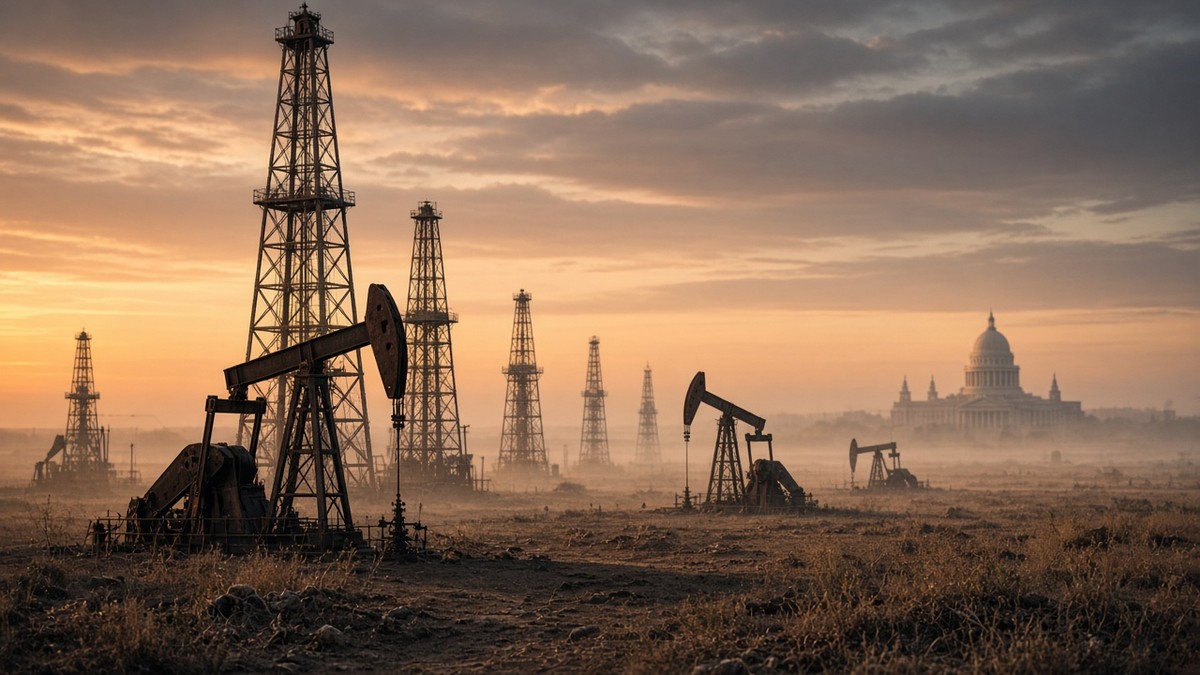
The politics of oil is running the week, even as the pump eases. Futures just posted a second straight weekly drop, and regular gasoline in the United States slipped back under $4 a gallon. None of that means Washington, OPEC+ or the sanctions desk clocked out.
CNBC reported that Brent futures settled Friday, 13 November, at $95.84 a barrel, while West Texas Intermediate finished at $88.56. Both dropped about 2.5 percent on the week, after falling 16 percent and 13 percent the week before. The Energy Information Administration, using 12 November closes, put wholesale spot Brent at $95.42 and spot WTI at $92.30. AAA, in the same EIA table, put regular gasoline at $3.87 a gallon nationwide and diesel at $6.06. The Washington Post said the national average hit $3.97 on Tuesday, under $4 for the first time since July.
OPEC+ holds December. The hard call is later this month.
OPEC said seven core OPEC+ producers, Saudi Arabia, Russia, Iraq, Kuwait, Kazakhstan, Algeria and Oman, met virtually on 1 November and decided to maintain September 2026 required production for December 2026. The next meeting is 29 November. Reuters noted about 2 million barrels a day of cuts remain through year-end, and that 2027 quotas are expected then. Reporting the International Energy Agency’s November Oil Market Report on 13 November, Reuters said the IEA now sees a fourth-quarter surplus, with supply at 105 million barrels a day, 1.7 million above forecast demand, the first surplus since the war in Iran began. OPEC, the same dispatch said, reported OPEC+ pumped 41.23 million barrels a day in October, up about 2.04 million from September and 97 percent of the pre-war February volume.
Sanctions split Iran and Russia
The war in Iran is in its ninth month, and the blockade is still Washington’s preferred pressure campaign. CNBC reported that President Donald Trump said on Truth Social that a deal with Iran was not necessary to end the war. The same report said Iran’s military claimed on Thursday that four oil tankers were hit by explosions, a claim Reuters could not immediately verify, and that Yemen’s Houthis said they had attacked Saudi oil infrastructure. Price fear has cooled as more Gulf barrels find workarounds. Squire Patton Boggs, in its November 2026 sanctions brief, said OFAC now uses a “presumed denial” licensing policy for Iran-related applications and has designated over 20 tankers tied to Iranian petroleum or petrochemicals.
Russia is the contradiction. The same brief said President Trump announced a deal with President Vladimir Putin for Russia to supply more than 300,000 tons of diesel to the United States and global markets, after which OFAC issued General License 135, authorizing related transactions until 7 April 2027. Some lawmakers have questioned whether U.S. imports under that license collide with the Ending Importation of Russian Oil Act of 2022. New Jersey’s governor has threatened “harsh penalties” for unloading Russian diesel at state terminals. On 16 October the president waived mandatory sanctions under the Lindsey O. Graham Sanctioning Russia and Iran Act of 2026 as “necessary to incentivize resolution of the Russia-Ukraine war.”
Venezuela is back on the hearing list
S&P Global reported PDVSA and partners produced 1.23 million barrels a day in October, targeting 1.3 million by year-end and 1.5 million by the end of 2027. Rystad Energy said the near-term rebound is mainly brownfield work and is unlikely to be derailed by the midterms, because licensing still sits largely with the executive branch. CNBC reported that Washington seized control of Venezuela’s oil exports in January after ousting former President Nicolás Maduro, and that the Pentagon took a stake in North American Blue Energy Partners, or NABEP. S&P Global said the August deal gives the United States a 35 percent interest and preferential access to 20 percent of production at cost. Senators Jeanne Shaheen, Jack Reed, Martin Heinrich and Elizabeth Warren wrote on 30 September demanding information about the deal, S&P Global reported.
Pump tools, midterms, and the next fight
The Department of Energy said on 29 October that it had awarded contracts for an exchange of more than 40 million barrels from the Strategic Petroleum Reserve, completing a 172-million-barrel U.S. release inside a coordinated 400-million-barrel IEA action. On 5 October, Executive Order 14435 directed Treasury to defer, to the extent authorized by law, certain diesel excise tax payments through 31 December 2026.
After Democrats won both chambers on 3 November, S&P Global recorded a 4 November selloff, with NYMEX December WTI down $8.39 to $87.70 a barrel and ICE January Brent down $9.58 to $94.02 at 1747 GMT. CNBC reported that Vice President JD Vance blamed the Republican loss on the war, and that House Minority Leader Hakeem Jeffries said Democrats will “end this reckless and costly war of choice that has skyrocketed gas prices all across the country.” A war powers resolution is likely, a veto is expected, and January committee control brings subpoena power over Venezuela oil revenues, the Russia diesel license, and other energy deals.
Global Celebrity Meter’s The Good, the Bad and the Ugly: War Rooms, or Oil? is the culture-desk cut of the same argument. Billionaire Meter’s California Proposition 42 wealth tax shield is the capital-defense read on how serious money walls off assets when politics turns. The politics of oil did not take the weekend off. It just changed rooms, from the trading floor to the hearing room.
The energy tape still has a people price and a capital reading. See Global Celebrity Meter’s live celebrity & executive brand valuations, and the Billionaire Meter yield & energy tracker, published as the Imagination and Capital Index.
Sponsored Placements
Brand sponsors: lock a Sponsored Placement on US Pulse News from $349 to $499 and put your name next to the energy story that actually moves the American conversation.
FAQ: The politics of oil, right now
What is driving the politics of oil this week?
Two clocks are running at once. OPEC+ has frozen December output at September’s required levels, with a bigger 2027 decision due on 29 November, while a Democratic Congress prepares to take power in January and open the books on energy deals, sanctions licenses and the Iran war.
Why did U.S. gasoline fall back under $4 a gallon?
AAA, as carried by the Energy Information Administration, put regular gasoline at $3.87 a gallon on 12 November, with diesel at $6.06. The Washington Post tracked the national average slipping under $4 earlier in the week as crude sold off, and the International Energy Agency said the market was moving back into surplus.
Are U.S. sanctions on Iran, Russia and Venezuela all moving the same way?
No. Iran faces a “presumed denial” licensing policy and fresh tanker designations, according to Squire Patton Boggs. Russia is still a sanctions target, yet General License 135 authorizes certain Russian diesel transactions until 7 April 2027. Venezuela’s recovery is proceeding under U.S. licensing and a contested NABEP arrangement that Democrats have already asked to review.
What can the new Congress actually change?
Sanctions licensing still sits largely with the executive branch, which is why Rystad Energy does not expect the midterms to derail Venezuela’s near-term rebound. What changes in January is oversight: subpoena power, hearings, and a likely war powers resolution that CNBC says the White House is expected to veto.
[…] Pulse News has already been on the price-and-power track in The Politics of Oil: Prices Are Easing. The Power Fight Is Not and in The Oil Politics Behind the Midterm Shock. The midterm backdrop matters because the […]