

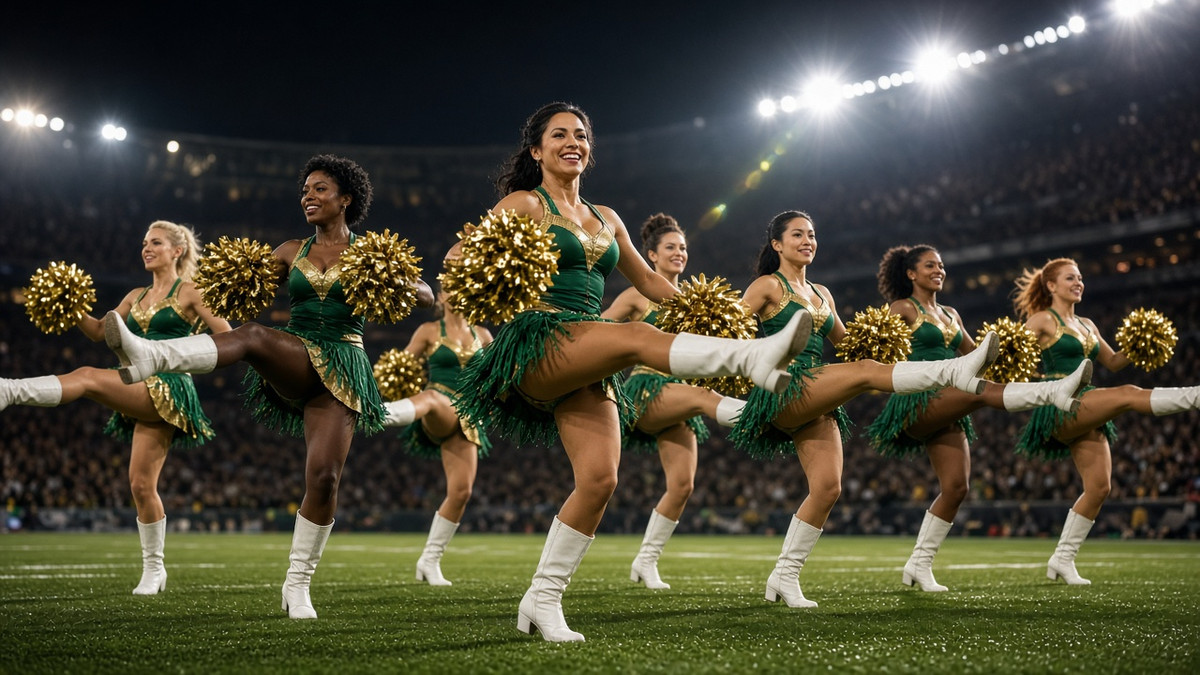
The NFL cheer economy is easy to see and hard to price. On Sundays it looks like kick lines and sparkle under the lights. Off camera it is labor: rehearsals, charity stops, official calendars, corporate appearances and television close-ups that help a franchise sell tickets, sponsors and a broadcast window.
For years that product was treated as atmosphere. The women who made it were often paid a flat game fee that, once unpaid practice and unpaid appearances were added, fell under the state minimum wage. That gap is a ledger, and starting in 2014 it became a docket.
What the NFL cheer economy actually sells
A professional football club is a media company that also plays a sport. Timeouts and halftime are inventory. A camera cut to a sideline routine is a reason for a casual viewer to stay through the break, and a reason for a sponsor to buy the bumper around it. Squads also sell official calendars and booked appearances on the same glamour the league puts on the field.
The live-event logic is the same show-around-the-attraction math we have mapped in the craze for Las Vegas and in how the biggest US theme parks actually pull people through the gate. Basketball uses a close cousin of the model, with dance teams filling timeouts and sponsor activations.
The 2014 wave: Raiderettes, Jills, Bengals and Jets
In January 2014, two former Oakland Raiderettes filed a class-action wage claim in Alameda County Superior Court. They alleged the squad’s contracted pay of $125 a home game, or $1,250 a season, fell under California’s minimum wage once rehearsals, game-day hours and required events were counted. The Los Angeles Times, Reuters and NBC Bay Area reported the claims, including unpaid overtime, end-of-season pay holds, unreimbursed expenses and fines.
In September 2014, the Raiders agreed to a $1.25 million settlement covering about 90 current and former Raiderettes from the 2010 through 2013 seasons. Coverage at the time said members would receive an average of about $6,000 per season worked from 2010 to 2012, and about $2,500 for 2013-14, after the club had already moved toward hourly minimum wage and overtime, plus an hourly rate reported at $9 with checks every two weeks.
The Buffalo Jills case lasted much longer. Five former Jills sued in New York in April 2014, alleging they had been misclassified as independent contractors and left unpaid for large blocks of rehearsal and appearance time. Management suspended the squad within days, and it has not returned. In March 2022, Cumulus agreed to pay $4 million, in stock, and the Bills $3.5 million, a combined $7.5 million, with Cumulus admitting no wrongdoing, as Spectrum News and Inside Radio documented.
Cincinnati’s Ben-Gals followed. Alexa Brenneman sued in 2014, saying she had been paid $855 for more than 300 hours in the 2013 season, a rate she put at roughly $2.85 an hour. In October 2015, CBS Sports and the Associated Press reported a $255,000 settlement, with eligible members from 2011 to 2013 able to receive up to $2,500 per season worked. The Bengals denied liability.
A New York Jets class action by a former Flight Crew member identified as Krystal C. alleged members were paid $150 a game and were not paid for weekly practice. In 2016, a New Jersey court approved a settlement of about $325,000 for 52 dancers from 2011 to 2013, the New York Times, the Associated Press and CNN reported. The Jets denied the claims. The Tampa Bay Buccaneers had already resolved a related class action in 2015 for up to $825,000, covering 94 cheerleaders, as the Washington Post and CBS Sports reported. In 2017, the Milwaukee Bucks agreed to a $250,000 settlement of a labor claim brought by former dancer Lauren Herington, the Milwaukee Journal Sentinel and ESPN reported.
Dallas, Netflix and a 2025 raise, with 2026 still watching
The highest-profile payroll change came from a camera, not a new judgment. Netflix premiered America’s Sweethearts: Dallas Cowboys Cheerleaders on 20 June 2024. TIME later noted that a 2018 lawsuit by former member Erica Wilkins, settled in 2019, had already lifted reported hourly pay from $8 to $12 and game-day pay from $200 to $400, yet the first season still showed many members keeping full-time work on the side.
The second season, released on 18 June 2025, followed veterans as they pressed the club for a new deal. In the finale, Megan McElaney described a “life-changing” 400 percent increase for the coming season. Jada McLean told the New York Times that her 2024 rates were $15 an hour and $500 an appearance, and that veterans could soon make more than $75 an hour. She later told Variety the pay structure had been rewritten, with different rates for rehearsals, games and appearances. The Cowboys did not publish a full rate card. Those numbers are the dancers’ own accounts, not an audited club disclosure.
A third season arrived on 16 June 2026. As of late August 2026, there was no widely reported second across-the-board raise on top of the 2025 deal, AS USA also noted, though Netflix announced a fourth season the same month. For the fame and brand reading of that spotlight, see the companion package on Global Celebrity Meter, Cheerleader Fame Machine. The booking logic sits next to the Celebrity Fees file on live performers now out-earning film stars.
How clubs use the squad, and which ones walked away
Teams still want the sideline picture, the broadcast cutaway, the calendar and the paid appearance. In 2018 the San Antonio Spurs retired the all-female Silver Dancers and installed a co-ed hype team. The Dallas Mavericks, Cleveland Cavaliers, Orlando Magic and Milwaukee Bucks also moved away from all-female dance squads around the 2018-19 season, after reporting on dancer pay and workplace culture, including a widely read Yahoo Sports investigation. In 2026, Spurs Sports and Entertainment said the Silver Dancers would return for the 2026-27 season, alongside the Hype Squad.
The Bills never restored the Jills after the 2014 suspension. The Chicago Honey Bears ended after the 1985 season. The Steelers have been without a squad since the Steelerettes ended in 1969. The Browns have gone without one for decades, and the Giants have never had cheerleaders. The Chargers and the Jets also appear on recent tallies of clubs with no squad; USA Today’s 2026 rundown still listed seven teams in that group, including those two. A 2024 change at the Arizona Cardinals was narrower: the club told the Arizona Republic that new field-level seating led it to keep cheerleaders and flag runners off the sideline for safety, while they still performed on the field during breaks.
The glamour is still a commercial asset. The lawsuits made the labor visible, a Netflix series forced the most famous squad’s pay into public view, and a handful of clubs decided the asset was optional. Spectacle still sells. The open question, in 2026, is how much of that sale lands with the people doing the kicks.
FAQ
What is the NFL cheer economy?
It is the commercial system around professional cheer and dance squads: game-day routines, television cutaways, official calendars and paid appearances that help clubs sell tickets, sponsors and broadcast attention. The labor behind that inventory became a legal issue when flat game fees were shown, in court filings, to fall below minimum wage once rehearsals and required events were counted.
How much did the Raiderettes settlement pay?
In September 2014 the Oakland Raiders agreed to a $1.25 million class-action settlement covering about 90 current and former Raiderettes from the 2010 through 2013 seasons, the Los Angeles Times, Reuters and NBC Bay Area reported. Coverage at the time said the deal would pay an average of about $6,000 per season worked from 2010 to 2012 and about $2,500 for 2013-14. The settlement resolved disputed claims and did not require a public admission of liability.
Did the Dallas Cowboys Cheerleaders get a pay raise after the Netflix series?
Yes, according to the dancers and to contemporaneous coverage. Season 2 of America’s Sweethearts, released on 18 June 2025, ended with Megan McElaney describing a life-changing 400 percent increase for the coming season. Jada McLean told the New York Times her 2024 rates were $15 an hour and $500 an appearance, and that veterans could soon make more than $75 an hour. The club did not publish a full official rate card. As of August 2026, no second across-the-board raise on top of that 2025 deal had been widely reported.
Which NFL teams do not have cheerleaders?
A 2026 USA Today rundown still listed seven clubs without a squad: the Buffalo Bills, Chicago Bears, Cleveland Browns, Los Angeles Chargers, New York Giants, New York Jets and Pittsburgh Steelers. The Giants have never had cheerleaders. The Bills suspended the Jills in 2014 after a wage suit and have not restored the squad. The Honey Bears ended after the 1985 season, and the Steelerettes ended in 1969.