

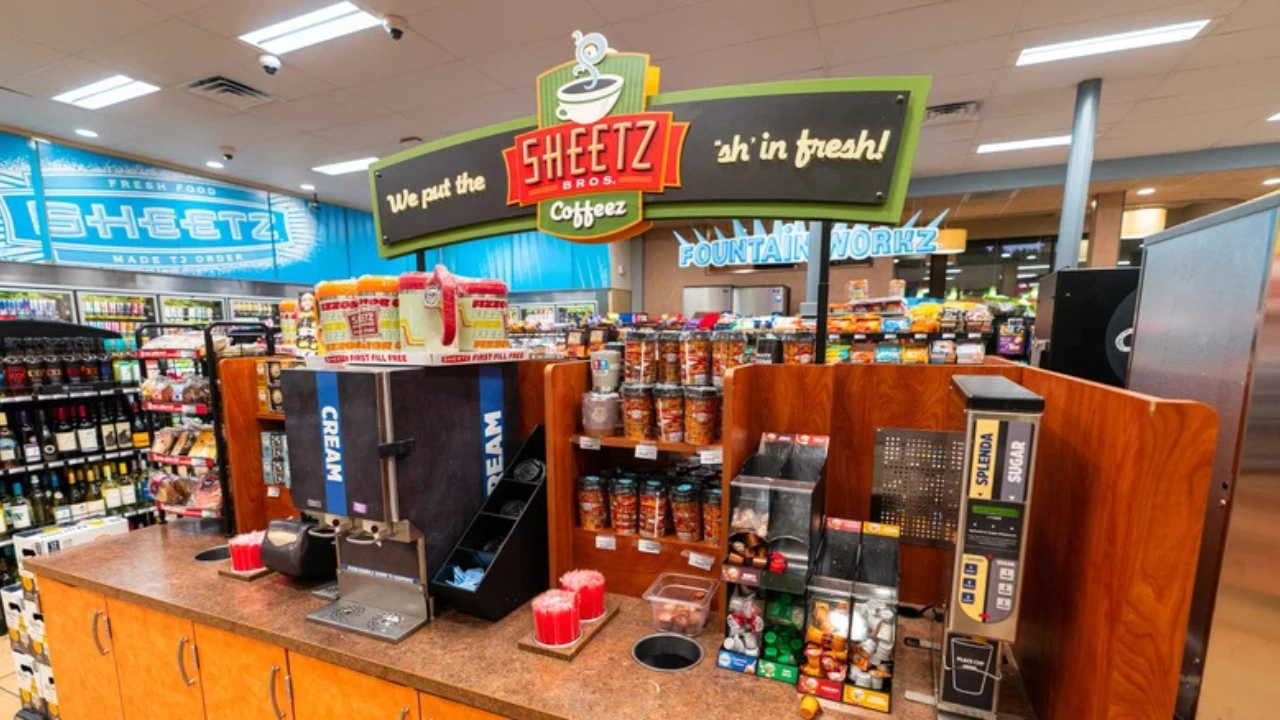
Sheetz vs Wawa: A long-standing regional rivalry is intensifying as Sheetz and Wawa expand into overlapping territories across the northeastern United States. At the heart of the competition is one crucial factor: made-to-order food. As both chains move closer geographically, customers are increasingly comparing menu variety, food quality, and overall in-store experience.
Wawa: A Legacy Brand with a Broad Footprint
Wawa’s roots date back to 1902, when it began as a dairy business. The company later transitioned into the food market sector in the 1960s, eventually building one of the most recognizable convenience store brands in the region. Today, Wawa operates 1,197 locations across 14 states, including Pennsylvania, New Jersey, Florida, Virginia, Maryland, Delaware, North Carolina, Georgia, Ohio, and Indiana.
This expansive footprint has made Wawa a household name in many communities. Its made-to-order menu is widely considered a cornerstone of its success. From customizable hoagies and breakfast sandwiches to soups, salads, and specialty beverages, Wawa emphasizes fresh preparation and consistency across its network.
Observers often credit the company’s dairy origins and early focus on food markets as foundational elements that shaped its strong food culture. As the chain continues to grow, its established brand identity and loyal customer base remain powerful competitive advantages.
Sheetz: Variety and Personality on the Menu
Sheetz, founded in 1952 in Altoona, Pennsylvania, has carved out a strong identity as a one-stop shop that blends fuel, convenience, and fast food under one roof. The chain currently operates 821 locations across seven states: Pennsylvania, North Carolina, Ohio, Virginia, West Virginia, Maryland, and Michigan. Nearly 40% of its stores are located in Pennsylvania, making it a dominant presence there.
Sheetz places heavy emphasis on its made-to-order offerings, which are known for their wide variety and playful branding. Menu categories frequently add a “z” for flair — such as “appz,” “sidez,” “burgerz,” and “dogz.” The selection includes sandwiches, pizzas, salads, chicken items, fish, and even Mexican-American dishes. The ordering system, often touchscreen-based, allows customers to customize meals extensively.
This focus on variety and personalization has helped Sheetz cultivate a loyal following, particularly among younger consumers seeking quick, customizable meals.
Overlapping Markets, Rising Competition
As both chains expand, their territories are beginning to intersect in several metropolitan areas. This overlap is intensifying competition, especially in regions where customers can easily choose between the two brands.
With similar price points and convenience-driven formats, food quality and menu innovation are emerging as key differentiators. When stores are located within close proximity, small differences in taste, customization options, or service speed can influence customer loyalty.
Industry observers note that both chains operate at significant multi-state scale, which raises the stakes in this rivalry. Network size, supply chain efficiency, and brand recognition all play roles in shaping the outcome.
Who Has the Edge?
Determining which chain truly offers the “best” made-to-order food ultimately comes down to customer preference. Wawa is often praised for its consistent hoagies and strong breakfast options, while Sheetz is known for menu diversity and bold flavor combinations.
If geographic overlap continues to grow, menu differentiation and in-store service will likely become even more critical. Innovation in food offerings, digital ordering systems, and customer engagement could tip the balance over time.
Key Takeaways
-
Both Sheetz and Wawa prioritize made-to-order food as a central part of their business models.
-
Wawa operates 1,197 locations across 14 states and traces its origins to a 1902 dairy business.
-
Sheetz runs 821 locations in seven states and emphasizes menu variety with distinctive branding.
-
Increasing territorial overlap is intensifying competition in the Northeast.
As the rivalry continues to evolve, customers stand to benefit most — with more choices, better quality, and greater innovation shaping the future of convenience-store dining.
[…] Not every US icon is winning. On Interbrand’s 2026 list, Nike fell 35.5% to $21.7 billion (No. 32). Tesla dropped 25 places to No. 50 and lost almost 38% of its value, one of the biggest falls in the ranking, Chain Store Age reported. Kantar sees Tesla differently: it has the carmaker up 30% at $112.1 billion. Kantar also says Spain’s Zara has overtaken Nike as the world’s most valuable apparel brand. Pepsi slipped 1.1% to $20.1 billion at Interbrand. Want a smaller-scale brand fight? Read our look at Sheetz vs. Wawa’s made-to-order food battle. […]