

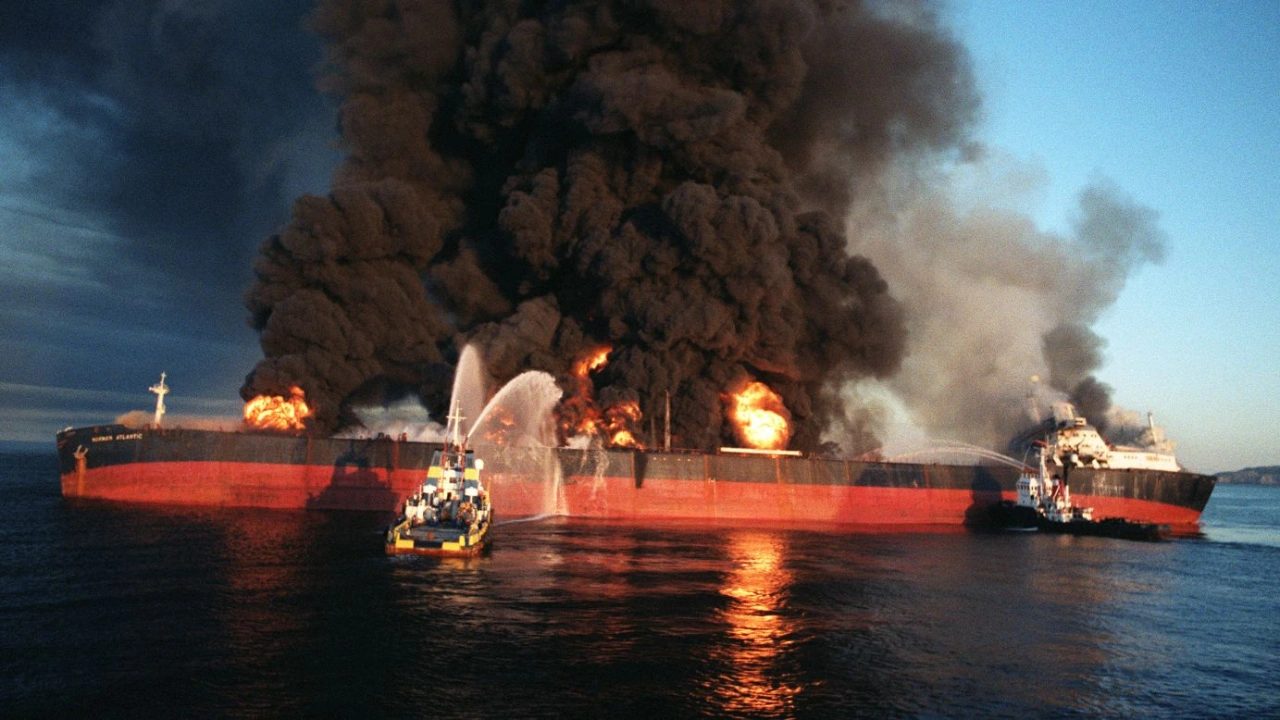
Tensions in the Middle East continue to escalate as Iran signaled it could deploy naval mines in the Persian Gulf, a move that could significantly disrupt global shipping and energy supplies. The warning comes amid a rapidly intensifying conflict involving the United States and Israel.
Iranian officials indicated that naval mines could be used to block or restrict maritime routes in the region, particularly the critical Strait of Hormuz, through which a significant portion of the world’s oil supply travels. The threat is widely seen as a response to mounting pressure from Washington and its allies following recent military strikes.
The situation intensified after former U.S. president Donald Trump issued a strong warning to Tehran. Trump said that the United States would target Iranian power plants if the country failed to reopen the Strait of Hormuz to global shipping within 48 hours. According to his statement, Washington would take decisive action to ensure international maritime routes remain accessible.
Iran quickly responded by warning that any attack on its infrastructure would trigger retaliatory strikes against American and Israeli energy facilities and military bases across the region. Officials in Tehran suggested that U.S. installations and key infrastructure in allied countries could become targets if hostilities escalate further.
The conflict has already caused significant damage and casualties across the region. Iranian missiles struck two communities in southern Israel late Saturday, damaging buildings and injuring dozens of people. The attacks occurred near one of Israel’s key nuclear research areas, heightening concerns about a wider regional confrontation.
The latest developments mark the fourth week of an increasingly dangerous conflict that has spread across multiple fronts in the Middle East. According to available estimates, the war has already resulted in more than 1,500 deaths in Iran, over 1,000 in Lebanon, and at least 15 fatalities in Israel. In addition, 13 U.S. military personnel have reportedly been killed, along with several civilians caught in the crossfire in the Gulf region.
Millions of people in Iran and Lebanon have also been displaced as a result of the ongoing hostilities, creating a growing humanitarian crisis.
Regional governments are now on high alert as missile and drone attacks threaten several Gulf countries. Authorities in Kuwait reported that their air defense systems intercepted incoming drones and missiles early Monday. Meanwhile, the United Arab Emirates confirmed that its air defenses were actively responding to missile and drone threats originating from Iran.
Air raid sirens were also activated in Bahrain, signaling the heightened security concerns spreading throughout the Gulf region.
The escalating crisis has prompted diplomatic engagement among global leaders. Mohammed bin Salman received a phone call from Emmanuel Macron, who expressed solidarity with Saudi Arabia and condemned what he described as repeated Iranian attacks targeting the kingdom.
Macron also reaffirmed France’s support for measures taken by Riyadh to protect its sovereignty and territorial integrity amid the rising tensions.
The conflict is also shaking global energy markets. According to Fatih Birol, the current crisis is more severe than the energy shocks experienced during the 1970s. Speaking at the National Press Club of Australia, Birol warned that reopening the Strait of Hormuz is essential to stabilizing the global energy supply.
Oil prices have already shown significant volatility as the conflict disrupts shipping routes and energy production in the region. West Texas Intermediate briefly surged during trading before settling at around $97.86 per barrel, slightly below its previous close.
Meanwhile, Brent Crude traded above $111 per barrel, having previously reached nearly $120 earlier in the week. Since the conflict began, oil prices have climbed dramatically, with Brent rising from roughly $70 per barrel at the start of the crisis.
Energy analysts warn that if the Strait of Hormuz remains blocked or if naval mines are deployed, global oil supplies could face severe disruption. Such a development could trigger further spikes in energy prices and place additional strain on the global economy.
With military tensions rising and diplomatic efforts intensifying, the coming days may prove critical in determining whether the conflict escalates further or moves toward a fragile de-escalation.